
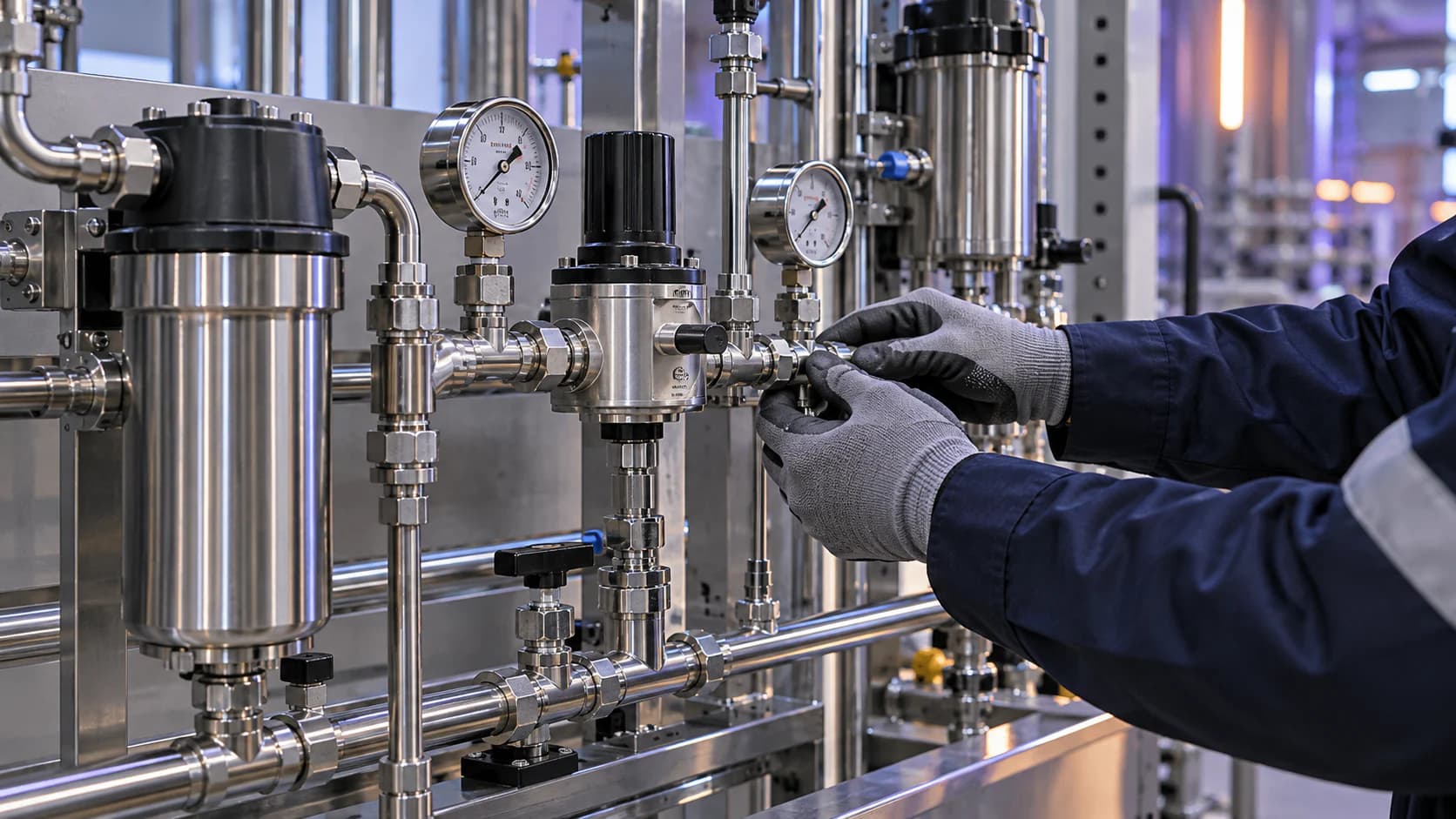
The Challenge
Fluid-system reliability is often assessed component-by-component at the point of purchase, then experienced as a system in the field — where a single weak link (a mismatched material, an under-specified connection, an undocumented substitution) determines whether the whole system performs as expected over its service life.
Technical Breakdown
Pressure and temperature requirements need to be assessed at the actual worst-case operating condition, not just nominal duty — transient conditions during startup, shutdown or upset can exceed steady-state ratings and are a common source of premature component failure.
Fluid compatibility covers more than corrosion resistance: elastomer seal compatibility with the specific process fluid, and compatibility with any cleaning or purging media used during maintenance, both need to be confirmed for every wetted component.
Tubing material and hardness affect both corrosion performance and how reliably a compression fitting seals over the system's service life — excessively hard or excessively soft tubing outside a fitting manufacturer's specified range can compromise the ferrule bite even when the fitting itself is correctly rated.
Connection technology needs to be selected for the actual pressure and cycling duty, not carried over by habit from a previous, differently-rated system.
Leakage and emissions performance is increasingly a specified requirement in its own right, not just a byproduct of correct component selection — where fugitive emissions limits apply, connection technology and valve packing selection need to be evaluated against that requirement specifically.
Installation quality determines whether a correctly specified system actually performs as designed: torque/pull-up discipline, tube preparation and support all affect real-world reliability as much as the component specification itself.
Engineering / Procurement Checklist
What to define before requesting a quotation.
- Worst-case (not just nominal) pressure and temperature conditions for every wetted component
- Elastomer/seal compatibility with process fluid and maintenance media
- Tubing material and hardness within the fitting manufacturer's specified range
- Connection technology matched to actual pressure and cycling duty
- Fugitive emissions requirements, where applicable
- Installation procedure and quality control for the selected components