
The Challenge
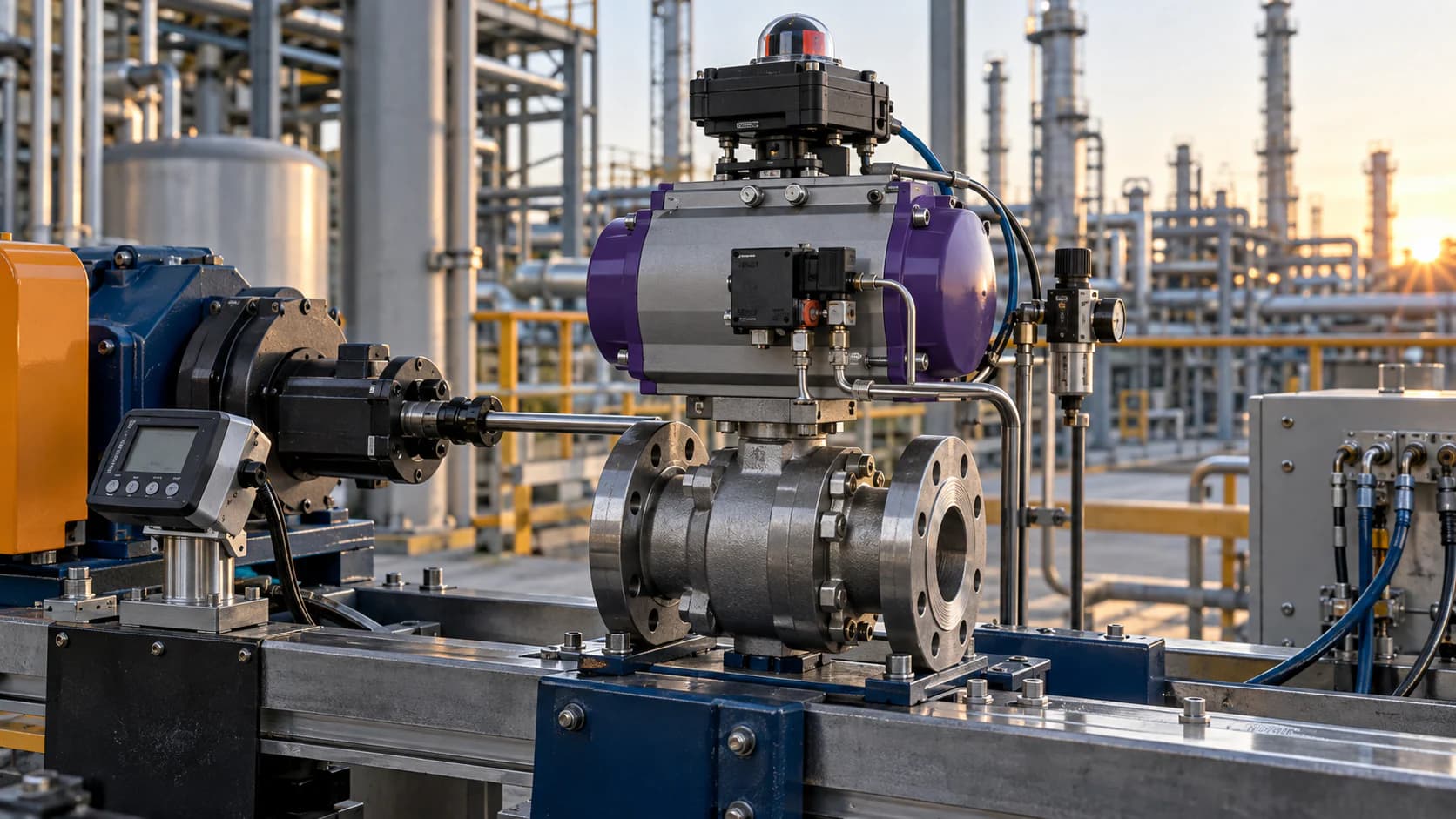
An actuator package is frequently specified after the valve is already selected, treated as a bolt-on accessory rather than an engineered pairing. Undersized torque, the wrong fail-safe position, or an actuator not rated for the installation environment are all findings that surface during commissioning — the most expensive point to discover them.
Technical Breakdown
Torque sizing has to account for more than the valve manufacturer's nominal seating/unseating torque figure: a safety margin, and the actual differential pressure and fluid conditions at the point of actuation (which can be worse than shutoff torque under certain process conditions), both need to be built into the actuator selection.
Fail-safe position — fail-open, fail-close or fail-in-place — is a process safety decision, not an actuator catalogue option. It has to be defined from the process P&ID and safety case, since the wrong fail position on loss of signal or air/power supply can itself create a hazard.
Actuator type (pneumatic, electric, hydraulic) is driven by available utilities on site, required stroke speed, and whether fail-safe spring-return action is needed — pneumatic actuators are the common default where instrument air is available and fail-safe spring return is required.
Environmental and area classification requirements — ambient temperature range, ingress protection rating, and hazardous-area certification (ATEX/IECEx) where applicable — determine actuator and control accessory selection just as much as torque does.
Controls and feedback (positioners, limit switches, solenoid valves) need to be specified to match the control philosophy of the loop — on/off duty and modulating/throttling duty have materially different actuator and positioner requirements.
Engineering / Procurement Checklist
What to define before requesting a quotation.
- Valve seating/unseating torque and applicable safety margin
- Required fail-safe position (fail-open / fail-close / fail-in-place)
- Available utilities on site (instrument air, electrical power) and required stroke speed
- Ambient conditions and hazardous-area classification, including required certification
- Control philosophy: on/off vs. modulating, and required feedback/accessories